
FIELD OFFICER DAN ASSISTANT FIELD OFFICER
Yayasan Palung (YP) sebuah organisasi yang bekerja di bidang konservasi orangutan dan habitatnya di wilayah Kalimantan Barat khususnya Kabupaten Ketapang dan Kabupaten Kayong Utara saat ini sedang mencari 1 (satu) Field Officer dan 2 (dua) Assistant Field Officer untuk bekerja pada Program Pendidikan Lingkungan dan Program Perlindungan Satwa dan Habitat yang berbasis di kantor Yayasan Palung di Ketapang, Kalimantan Barat.
Kandidat diharapkan siap dan mampu secara mental dan fisik untuk bekerja di luar gedung kantor dan dengan jam kerja yang mengikuti kondisi di lapangan, (contoh mendampingi kegiatan yang mengharuskan untuk berjalan jauh dan menginap di dalam hutan untuk beberapa hari).
Monday, December 14, 2009


Tuesday, December 1, 2009
Indonesia: Timber Corruption’s High Costs
(versi Bahasa Indonesia di bawah)
$2 Billion Annual Revenue Loss and Damage to Rule of Law, Human Rights
- Illegally logged timber seized from the Ketapang district port, West Kalimantan, awaits auction by local police.© 2008 Yayasan Titian
- Widespread corruption in the forest industry is the dirty secret no one wants to talk about. But until the lack of oversight and conflicts of interest are taken seriously, pouring more money into the leaky system from carbon trading is likely to make the problem worse, not better.
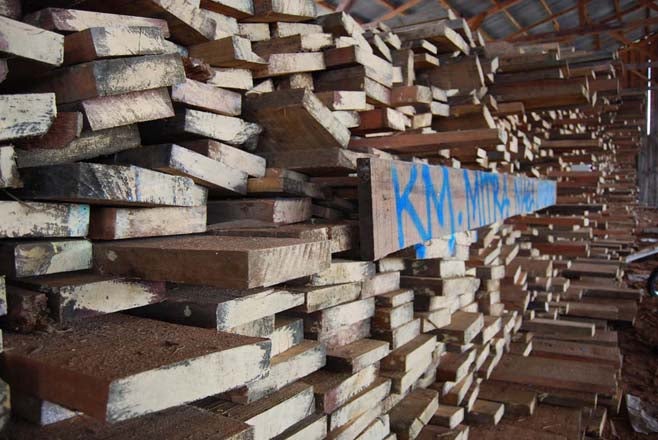
(Jakarta) - Corruption in Indonesia's lucrative forestry industry costs the government US$2 billion annually, detracting from the resources available to meet its obligations on economic and social rights, Human Rights Watch said in a report released today. Inadequate oversight and conflicts of interest also raise a red flag over whether Indonesia can be a reliable carbon-trading partner. Carbon trading schemes are likely to be an important topic at the United Nation's Climate Change Conference, which begins December 7, 2009, in Copenhagen.
The 75-page report, "Wild Money: The Human Rights Consequences of Illegal Logging and Corruption in Indonesia's Forestry Sector," found that more than half of all Indonesian timber from 2003 through 2006 was logged illegally, with no taxes paid. Unreported subsidies to the forestry industry, including government use of artificially low timber market prices and currency exchange rates, and tax evasion by exporters using a scam known as "transfer pricing," exacerbated the losses. Using industry methods, including detailed comparisons between Indonesia's timber consumption and legal wood supply, the report concluded that in 2006 the total loss to Indonesia's national purse was $2 billion.
The 75-page report, "Wild Money: The Human Rights Consequences of Illegal Logging and Corruption in Indonesia's Forestry Sector," found that more than half of all Indonesian timber from 2003 through 2006 was logged illegally, with no taxes paid. Unreported subsidies to the forestry industry, including government use of artificially low timber market prices and currency exchange rates, and tax evasion by exporters using a scam known as "transfer pricing," exacerbated the losses. Using industry methods, including detailed comparisons between Indonesia's timber consumption and legal wood supply, the report concluded that in 2006 the total loss to Indonesia's national purse was $2 billion.
Monday, November 30, 2009
Blog of Smiles
I’ve had a nice and wonderful time here in Ketapang during these past weeks of volunteering. It’s sad to go and I hope that the friends I’ve met here have enjoyed having me on as a sidekick. Learning about both the research that goes on at Gunung Palung and the raising awareness about biodiversity, poverty reduction and educational activities on the ground have opened up my eyes to the potential and challenges of orangutan conservation.
I am happy to have learned so much about Borneo, village life, and of course, orangutans during my small time volunteering here. It would be nice to hear from everyone again. Since the last post, we went to the hutan kota to see a semi-captive and rereleased wild orangutan, went to Riam Berasap for a traditional medicine show learning how even small forest plants have nice medicinal value, and appreciated Samad during his wedding! After the wedding, many of the staff went out for coconuts, also known as kelapas (Javanese klopos), on the beach south of town.
I am happy to have learned so much about Borneo, village life, and of course, orangutans during my small time volunteering here. It would be nice to hear from everyone again. Since the last post, we went to the hutan kota to see a semi-captive and rereleased wild orangutan, went to Riam Berasap for a traditional medicine show learning how even small forest plants have nice medicinal value, and appreciated Samad during his wedding! After the wedding, many of the staff went out for coconuts, also known as kelapas (Javanese klopos), on the beach south of town.
Tuesday, November 24, 2009
Menyediakan obat dari Tanaman Sendiri

Riam Berasap Jaya, 14 Nopember 2009. Beberapa kelompok perempuan di Desa Riam Berasap Jaya mengikuti perlombaan Tanaman Obat Keluarga (TOGA) yang di usung oleh PKK Desa Riam Berasap Jaya. Kegiatan lomba TOGA di ikuti oleh 9 kelompok yang merupakan Dasawisma dan beberapa kelompok wanita mandiri di desa tersebut.
Mengenal tanaman yang bermanfaat sebagai obat adalah alternative pengetahuan untuk peningkatan kesehatan dan kesejahteraan keluarga. Negeri ini banyak sekali jenis-jenis tanaman yang bermanfaat menjadi obat herbal, namun hanya sedikit orang yang mengetahui manfaat besar dari tanaman- tanaman yang sudah biasa kita lihat tersebut. Tanaman-tanaman yang biasanya digunakan untuk keperluan sehari-haripun selain menjadi rempah ternyata juga mengandung nilai penyembuh yang besar. Selain itu nilai-nilai tanaman hutan yang dikenal masyarakat hanya sebatas kayunya atau manfaat lain, ternyata mengandung unsur obat herbal yang luar biasa.
Monday, November 2, 2009
Lubuk Baji and then to the Villages
Hi there, this is an update about Yayasan Palung’s trip to the Lubuk Baji campsite in Gunung Palung National Park. This site was set up in 2005 to promote community awareness among children, incoming visitors and teachers about habitat protection, teamwork and wildlife. The day started out in the early morning with a jump into the Yayasan Palung truck and off to the field. We came to a school where the headmaster greeted us and, surprisingly, asked me to introduce myself. It was special to see how hard students worked to learn English, and valued having a fluent English speaker to help practice English with.
The hike up to Lubuk Baji was hill upon hill, culminating near the top with a downpour of rain. We spent the day appreciating the rainforest atmosphere, cooking noodles and tempeh, and allowing the children to learn about how to work as a team to protect the forest. Activities in the morning included observation of wildlife including groups to observe flora and fauna.
We saw hornbills, cuckoos, an orangutan nest, among other insects and big trees. The orangutan nest made us feel very close to the wild. Pak Udin, our guide, took us to a splendid view from the Batu Bulan lookout. On the return journey, some of us took a dip in the swimming hole under the waterfall. With the clean mountain water, why resist?
Tuesday, October 20, 2009
From the eyes of a volunteer
A quick introduction: my name is Arnab Saha and I recently came from the United States to Borneo to volunteer with Yayasan Palung for close to two months. I am interested in the relationship between human and orangutans, especially in their physiological connections, some which are brought to light by the transmissible diseases such as turberculosis, malaria, and measles, among other things (less commonly known as zoonosis). I also believe that there should be room for orangutans to live in the world with human aspirations, and that the habitats provide plentiful opportunities if looked at with long term vision.
These past two weeks at Yayasan Palung were filled with surprises, celebrations and new friendships. My initial impressions of Ketapang and Borneo were nice – there's a soft breeze, coconut palms and a vast array of fruiting plants. It's the season for salak and papaya, both enak (delicious). The field director, Andrew de Sousa, has moved into a new home, and hosted a very nice housewarming for many guests including the staff. Also, long-time animal keeper Pak Toriin is leaving Yayasan Palung to work with International Animal Rescue, who have recently began working in West Kalimantan. A small celebration was held in his honor in the early afternoon. This gave many members of the staff an opportunity to visit the transit center temporarily holding many orangutans confiscated as pets in the illegal pet trade. There were two male infants, a large twelve year old female, and a young female orangutan as well as a rescued eagle. There, the big female held out her hand and placed it gently on Meredith's forehead. She laughed. Maddy, a a volunteer at the center, also guided myself and Samad, also known here as Samad Khan for the Indian actor Saruk Khan (equally handsome) in the place. It is disturbing to know how long orangutans have stayed in this temporary center, intended for only a few weeks use, for over several months. Gosh it's nice to think that there are wild orangutans which still have their habitats.
I'm helping the Yayasan Palung education team to construct a poster raising awareness for orangutan conservation in the Sukadana region, where they run a newly-built Environmental Education Center adjacent to Gunung Palung National Park. I followed some of the team to the Center, where for a few days I helped tutor local children in English and plant organic vegetables to empower village leaders to sustainably keep Gunung Palung's forests and orangutans.
I got a taste of local entertainment when a few of the staff members took me to see a night fair and a haunted house in Sukadana before traveling back to Ketapang. I'm looking forward to the coming weeks - the durian season should be coming soon!
-Arnab

Monday, September 7, 2009
KEBUTUHAN AIR DI KOTA KETAPANG
KEBUTUHAN AIR DI
APA KABAR AIR?
Sudah kurang lebih 2 bulan kemarau melanda ketapang… hujan hanya sekali2 dengan intensitas yang kecil. Terakhir hujan turun di ketapang sekitar 16 agustus 2009 lalu.Air asin mulai masuk ke sungai pawan sampai ke daerah negeri baru. Air terasa payau.Bagi masyarakt kebanyakan, air sangat dibutuhkan sekali terutama air bersih untuk minum dan mandi mereka sehari–hari. Rata–rata orang dalam sehari bisa mengahabiskan air 20–25 galon sehari hanya untuk kebutuhan MCK.Keadaan ini mengakibatkan masyarakat yang mempergunakan air sungai pawan untuk keperluan MCK mulai terganggu dan mulai sulit untuk memperoleh air tawar.Belum lagi di perparah dengan semakin banyakya supur (perigi) yang mulai mongering, bahkan tidak banyak sumur yang terinterupsi air asin.
- Kita bayangkan apabila 10–20 tahun lagi air telah benar–benar habis..Bahkan mungkin dalam satu hari kita hanya bisa menikmati setengah gelas kecil saja yang bisa kita teguk tidak pada 20 tahun kemarin…kita bisa minum 8-10 gelas/hari. Apakah kita masih bisa menikmati air yang selama ini kita buang begitu saja?? Apakah kita masih bisa mandi dengan air yang banyak untuk menyegarkan tubuh kita? Apakah kita masih bisa minum untuk menghilangkan rasa haus pada diri kita? Kemungkinan itu mungkin masih bisa,tapi sangat tipis sekali… Apakah masih ada orang – orang yang menjajakan air untuk di jual??jawaban nya, masih dan itu pasti dengan harga yang sangat tinggi sekali..mungkin untuk 1 liter air saja bisa mencapai jutaan bahkan puluha juta rupiah…percayakah anda???
- Bagaimana masyarakat memperoleh air tawar untuk kepentingan konsumsi dan MCK di ketapang pada musin kemarau ini?
Kebanyakan manusia sekarang untuk mendapatkan air tawar demi kebutuhan, mereka membuat parit atau sumur galian,dan biasanya juga mereka membeli air kepada perusahaan PDAM.
Bagaimana cara mengatasinya?? Mencoaba untuk memulai lah dari sekarang tanamkan sikap peduli lingkungan, buang sampah pada tempat nya, dan coba lah untuk menanam pohon walaupun hanya 1 batang saja. Menanam pohon sangat berharga untuk masa depan bumi kita, karena pohon dapat menyerap karbondioksida sepanjang hidupnya,dan siklus air secara terus menerus( pohon mennyerap air dan menguap ke udara sehingga membentuk awan yang kemudian menjadi hujan). Menanam pohon sangat berharga untuk masa depan bumi kita, karena pohon dapat menyerap karbondioksida sepanjang hidupnya
Mungkin hal inilah yang bisa kita tanamkan mulai dari sekarang untuk masa depan yang lebih cerah…GO GREEN.
Subscribe to:
Posts (Atom)