
A much less reported victory for local resistance against oil palm happened on March 18 in West Kalimantan (Indonesian Borneo). Two local indigenous leaders, Japin and Vitalis Andi, were released from custody after spending more than three weeks in a Ketapang jail for opposing a Sinar Mas oil palm plantation which is destroying indigenous lands.
Friday, March 19, 2010
Tough week for Sinar Mas
Food giant Nestlé found itself on the defensive, with the release of a report from Greenpeace criticizing the company for buying palm oil from Sinar Mas. This comes three months after the largest buyer of palm oil, Unilever, announced that it would no longer be purchasing palm oil from Sinar Mas, followed a month later by a similar announcement from Kraft Foods. Nestlé’s immediate response that Sinar Mas palm oil was only used in products sold on the domestic market, a practice that they would discontinue, showed how controversial Sinar Mas has become internationally. Western consumers are becoming increasingly concerned about palm oil plantations that have been clearing forests across the archipelago, destroying local habitats, particularly in Sumatera, Borneo and Papua where most of the remaining rainforests are located in Indonesia.
A much less reported victory for local resistance against oil palm happened on March 18 in West Kalimantan (Indonesian Borneo). Two local indigenous leaders, Japin and Vitalis Andi, were released from custody after spending more than three weeks in a Ketapang jail for opposing a Sinar Mas oil palm plantation which is destroying indigenous lands.
A much less reported victory for local resistance against oil palm happened on March 18 in West Kalimantan (Indonesian Borneo). Two local indigenous leaders, Japin and Vitalis Andi, were released from custody after spending more than three weeks in a Ketapang jail for opposing a Sinar Mas oil palm plantation which is destroying indigenous lands.


Tuesday, March 2, 2010
Indonesia's Protected Forests Now Open to Development

Indonesia continues to have one of the highest rates of deforestation in the world. (Reuters Photo/Yusuf Ahmad)
The decree, which took effect on Feb. 1, is certain to anger environmental groups given that the country already has one of the fastest rates of deforestation in the world.
“The use of forest areas for development activities can be done for unavoidable strategic purposes,” said the decree, which said key development projects included power plants, renewable energy, toll roads and train lines.
The decree said open-pit and underground mining could take place in production forests, which is a forest area considered neglected or abandoned after trees have been cut.
Tuesday, February 16, 2010
Read MIaS Bulletin online!

Yayasan Palung's MIaS Bulletin is online. Download the latest issue (Arti Air Bagi Kehidupan)
The Indonesian-language MIaS (Media Informasi Pencinta Satwa) is distributed for free to schools, government offices and elsewhere in Ketapang and Kayong Utara. Recent issues have looked at gibbons as a protected species, alternative energy, the relationship between water and deforestation, and efforts to combat illegal mining, illegal logging and the animal trade. The next issue will look at environmental education and other hot topics in West Kalimantan.
Wednesday, January 27, 2010
Yayasan Palung on the Web
In addition to this blog, Yayasan Palung is developing many internet sources to keep everyone updated on our efforts to save the orangutan.
Follow us on Twitter
Become a fan on Facebook (mostly in Indonesian)
Or join our cause on Facebook (mostly in English)
And of course we still have our main webpage at www.savegporangutans.org
Feel free to add your own favorite sources for orangutan conservation news in the comments!
Follow us on Twitter
Become a fan on Facebook (mostly in Indonesian)
Or join our cause on Facebook (mostly in English)
And of course we still have our main webpage at www.savegporangutans.org
Feel free to add your own favorite sources for orangutan conservation news in the comments!
Monday, January 18, 2010
KEGIATAN YANG DILAKUKAN YAYASAN PALUNG AKHIR 2009
- Pelatihan media dan kreatifitas belajar mengajar guru Smp KKU ; Kegiatan ini 2 hari, dari tanggal 16-17 des 09. Nama kegiatan Pelatihan tentang pemanfaatan media lingkungan dalam proses pembelajaran. Pesertanye, guru-guru SMP di Kec Sukadana. Pemanfaatan lingkungan alam dan lingkungan sekitar kita sebagai media pembelajaran ; Koran bekas, sinetron, film, pohon, tanah, air, sebagai bahan ajar dengan metode menyenangkan siswa, tidak membosankan, menarik sehingga dapat diserap siswa yang memiliki tingkat daya serap terendah sekalipun.
- Pembuatan energy alternative.kegiatan energy alternative baru pada tahap persiapan perlengkapan, bahan yang berasal dari drum bekas minyak dan sudah dimodifikasi sesuai kebutuhannya ini akan dicoba pada tahun 2010.Dengan tujuan pemanfaatan limbah/kotoran ternak/tanaman yang mengandung metan, bisa menghasilkan gas sebagai bahan bakar
Monday, December 14, 2009
LOWONGAN KERJA
FIELD OFFICER DAN ASSISTANT FIELD OFFICER
Yayasan Palung (YP) sebuah organisasi yang bekerja di bidang konservasi orangutan dan habitatnya di wilayah Kalimantan Barat khususnya Kabupaten Ketapang dan Kabupaten Kayong Utara saat ini sedang mencari 1 (satu) Field Officer dan 2 (dua) Assistant Field Officer untuk bekerja pada Program Pendidikan Lingkungan dan Program Perlindungan Satwa dan Habitat yang berbasis di kantor Yayasan Palung di Ketapang, Kalimantan Barat.
Kandidat diharapkan siap dan mampu secara mental dan fisik untuk bekerja di luar gedung kantor dan dengan jam kerja yang mengikuti kondisi di lapangan, (contoh mendampingi kegiatan yang mengharuskan untuk berjalan jauh dan menginap di dalam hutan untuk beberapa hari).
Yayasan Palung (YP) sebuah organisasi yang bekerja di bidang konservasi orangutan dan habitatnya di wilayah Kalimantan Barat khususnya Kabupaten Ketapang dan Kabupaten Kayong Utara saat ini sedang mencari 1 (satu) Field Officer dan 2 (dua) Assistant Field Officer untuk bekerja pada Program Pendidikan Lingkungan dan Program Perlindungan Satwa dan Habitat yang berbasis di kantor Yayasan Palung di Ketapang, Kalimantan Barat.
Kandidat diharapkan siap dan mampu secara mental dan fisik untuk bekerja di luar gedung kantor dan dengan jam kerja yang mengikuti kondisi di lapangan, (contoh mendampingi kegiatan yang mengharuskan untuk berjalan jauh dan menginap di dalam hutan untuk beberapa hari).
Tuesday, December 1, 2009
Indonesia: Timber Corruption’s High Costs
(versi Bahasa Indonesia di bawah)
$2 Billion Annual Revenue Loss and Damage to Rule of Law, Human Rights
- Illegally logged timber seized from the Ketapang district port, West Kalimantan, awaits auction by local police.© 2008 Yayasan Titian
- Widespread corruption in the forest industry is the dirty secret no one wants to talk about. But until the lack of oversight and conflicts of interest are taken seriously, pouring more money into the leaky system from carbon trading is likely to make the problem worse, not better.
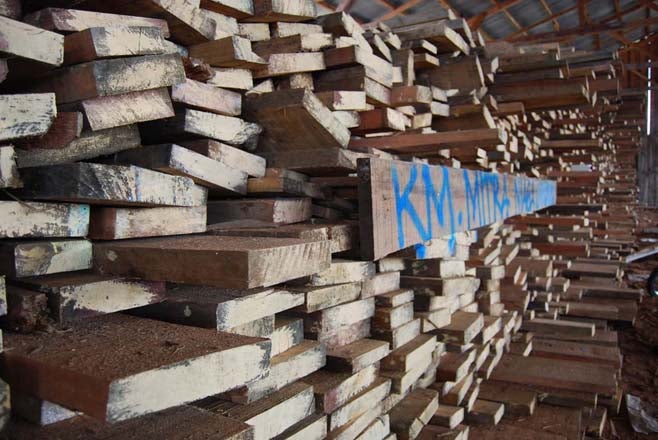
(Jakarta) - Corruption in Indonesia's lucrative forestry industry costs the government US$2 billion annually, detracting from the resources available to meet its obligations on economic and social rights, Human Rights Watch said in a report released today. Inadequate oversight and conflicts of interest also raise a red flag over whether Indonesia can be a reliable carbon-trading partner. Carbon trading schemes are likely to be an important topic at the United Nation's Climate Change Conference, which begins December 7, 2009, in Copenhagen.
The 75-page report, "Wild Money: The Human Rights Consequences of Illegal Logging and Corruption in Indonesia's Forestry Sector," found that more than half of all Indonesian timber from 2003 through 2006 was logged illegally, with no taxes paid. Unreported subsidies to the forestry industry, including government use of artificially low timber market prices and currency exchange rates, and tax evasion by exporters using a scam known as "transfer pricing," exacerbated the losses. Using industry methods, including detailed comparisons between Indonesia's timber consumption and legal wood supply, the report concluded that in 2006 the total loss to Indonesia's national purse was $2 billion.
The 75-page report, "Wild Money: The Human Rights Consequences of Illegal Logging and Corruption in Indonesia's Forestry Sector," found that more than half of all Indonesian timber from 2003 through 2006 was logged illegally, with no taxes paid. Unreported subsidies to the forestry industry, including government use of artificially low timber market prices and currency exchange rates, and tax evasion by exporters using a scam known as "transfer pricing," exacerbated the losses. Using industry methods, including detailed comparisons between Indonesia's timber consumption and legal wood supply, the report concluded that in 2006 the total loss to Indonesia's national purse was $2 billion.
Subscribe to:
Posts (Atom)